
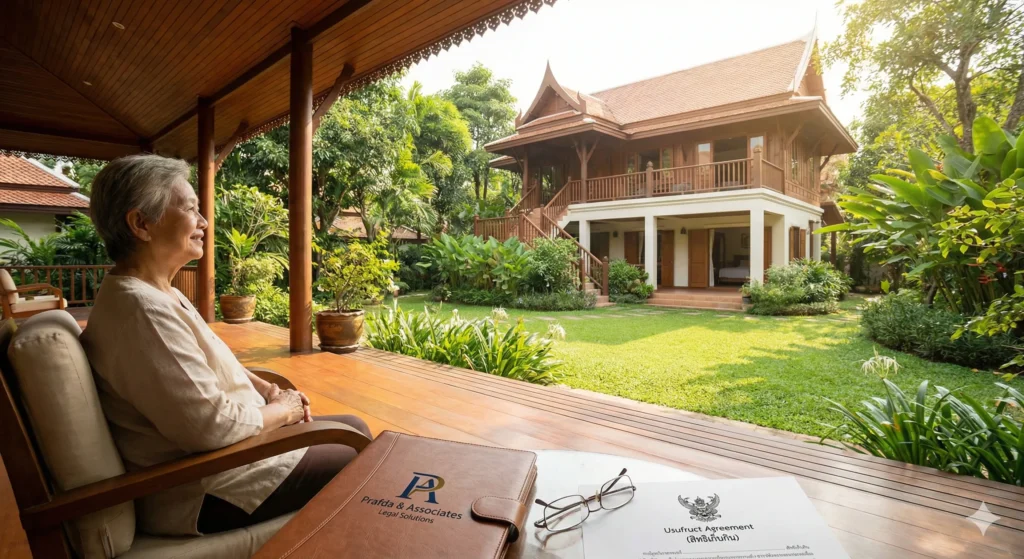
When a Loved One Passes Away, But Your Right to Reside Remains Protected
In Thailand, usufruct (known in Thai as สิทธิเก็บกิน) is a legal arrangement that grants a person the right to use and reside on a property owned by someone else—often without transferring ownership.
This right is especially valuable in personal and family contexts, such as when a spouse, partner, or close relative provides the right to use a house or land during your lifetime. A common concern arises when the property owner passes away: What happens to the usufruct right?
 Key Legal Principles You Should Know:
• Under the Thai Civil and Commercial Code (Sections 1417–1428), a registered usufruct continues to be valid even after the death of the owner, as long as the usufructuary (the person granted the right) is still alive.
• The usufruct ends only upon the death of the usufructuary—not the original landowner.
• This right is non-transferable and non-inheritable, meaning it cannot be sold, given away, or passed down.
• To be legally enforceable, the usufruct must be registered at the Land Office and clearly recorded on the property title deed.
 Usufructs can offer practical legal protection for foreign nationals or elderly dependents living in Thailand who may not own land themselves. Whether you’re planning future asset arrangements with your loved ones or seeking to secure housing rights without ownership, registering a usufruct may be a prudent legal option.
For accurate legal guidance, document drafting, and assistance with Land Office registration, please feel free to contact our legal team.